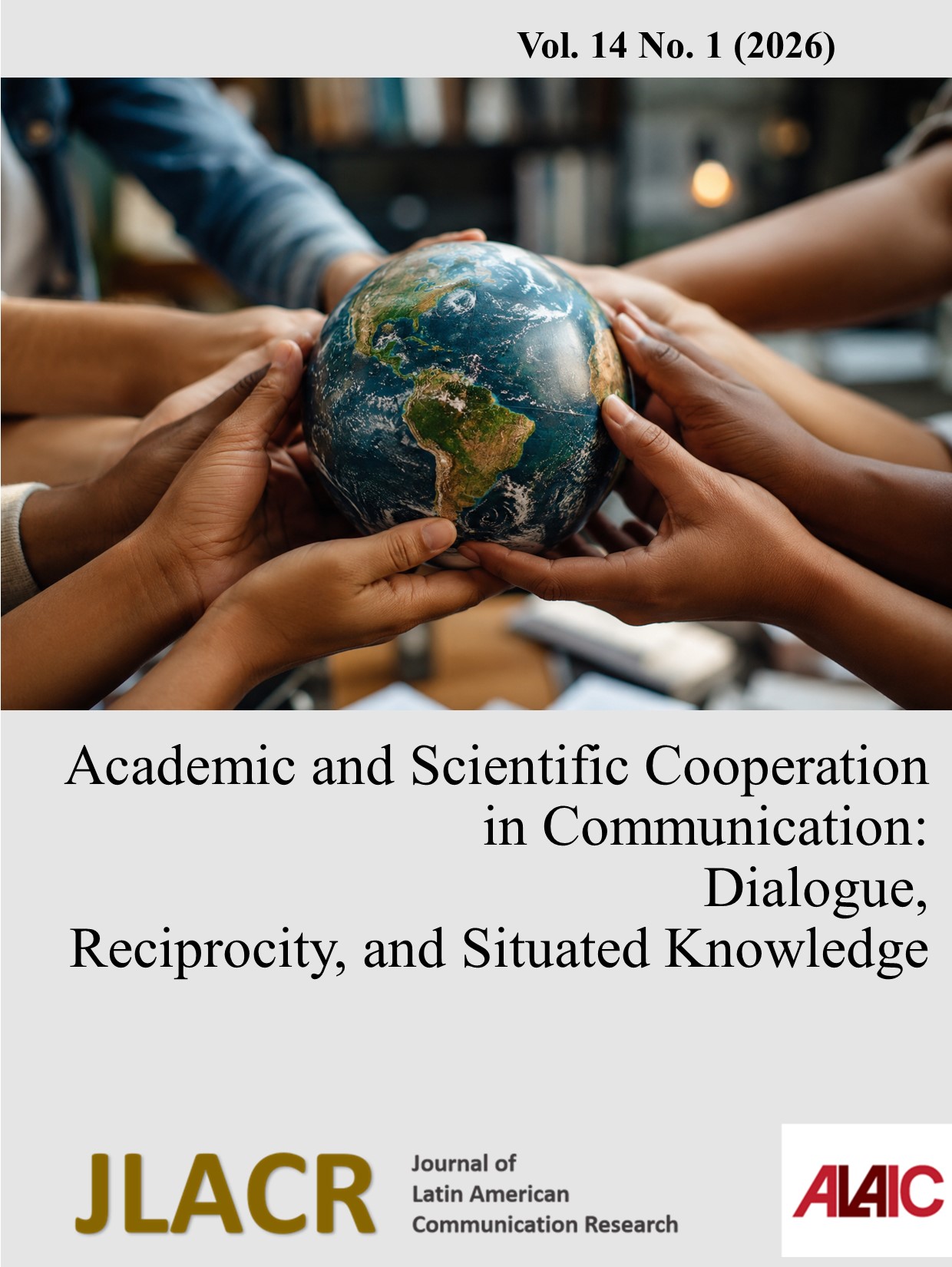
Building Global Networks for Collaborative Journalism Research and Cross-Border Journalism Education: Lessons Learned from Five Projects at the Erich Brost Institute for International Journalism
DOI:
https://doi.org/10.55738/journal.v14i1p.110-121Resumen
This article examines the role of academic cooperation as a communicative and epistemic infrastructure through the experience of five international journalism research and education projects coordinated by the Erich Brost Institute for International Journalism at TU Dortmund University. Drawing on comparative studies of media accountability, migration coverage across Europe and Africa, and multilingual journalism education initiatives, the article argues that contemporary academic cooperation extends beyond institutional exchange to become a mechanism for negotiating knowledge, professional norms, and methodological frameworks across linguistic, cultural, and geopolitical boundaries. The analysis highlights both the opportunities and challenges of transnational collaboration, including issues of epistemic plurality, digital inequality, language hierarchies, and asymmetries in research infrastructure. The projects discussed demonstrate how international cooperation can foster more dialogical, context-sensitive, and inclusive forms of knowledge production while simultaneously revealing the tensions that shape global communication research and journalism education. The article concludes that academic cooperation has become a central practice for sustaining critical, comparative, and globally interconnected communication scholarship in an era of geopolitical fragmentation and democratic uncertainty.